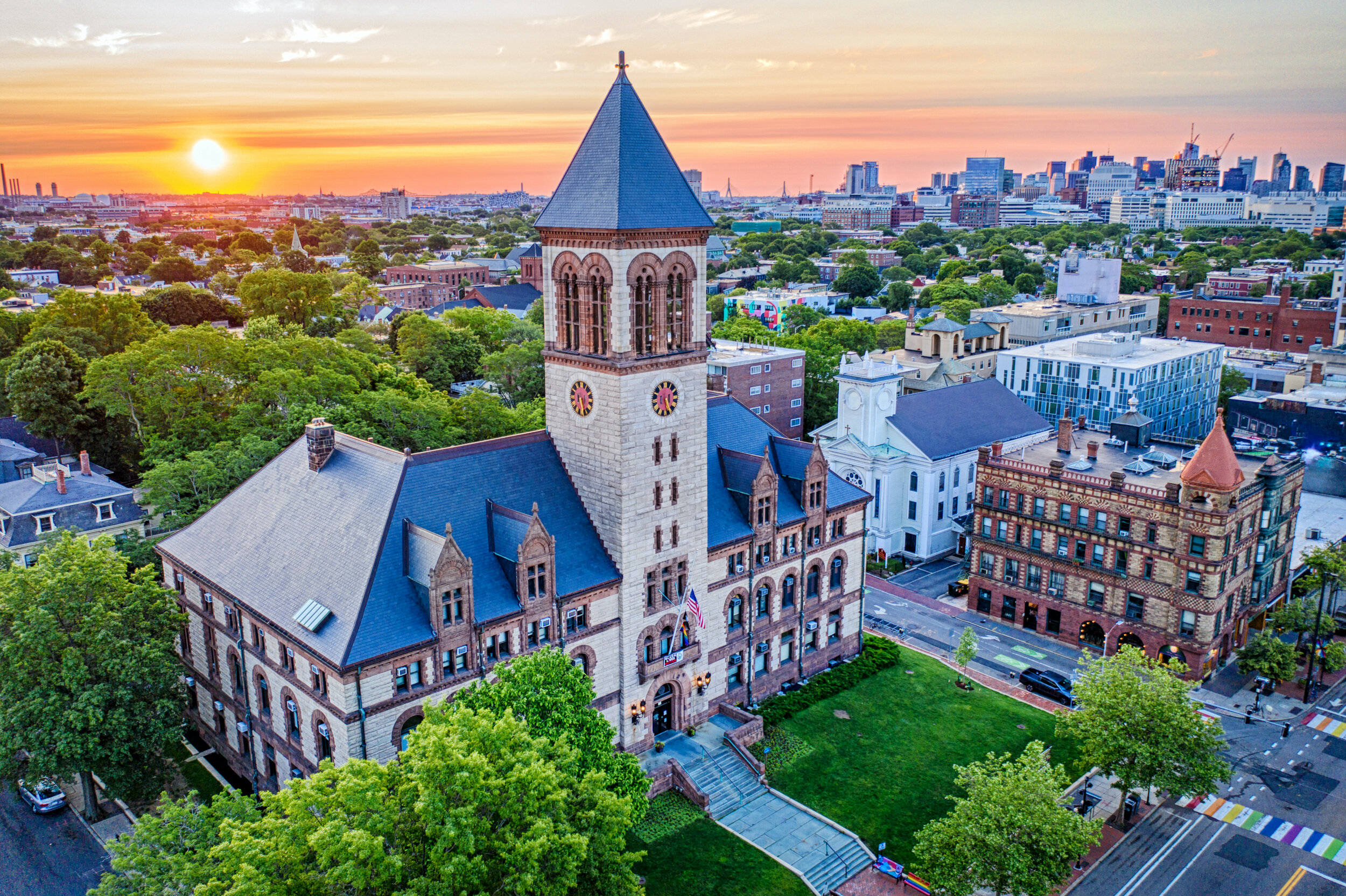

Correction: There will be public comment tonight.
The Ordinance Committee will continue discussion of two major zoning petitions introduced by the City Council: the Massachusetts Avenue Zoning Petition and the Cambridge Street Zoning Petition. These proposals are intended to update zoning along these two main corridors to encourage new housing, more active storefronts, and improved urban design, per goals set out in Envision Cambridge.
The Ordinance Committee is composed of all nine members of the City Council. Both the Mass Ave and Cambridge Street petitions received 7-0 recommendation votes from the Planning Board.
Massachusetts Avenue Zoning Petition
The proposal would replace the existing business and mixed-use districts along Mass Ave with three new zoning districts. The change would allow buildings of up to 12 stories for residential use throughout the corridor and up to 18 stories in Porter Square under a new Planned Unit Development (PUD) Overlay District.
The petition follows the Mass Ave Planning Study (2025), which identified the corridor as a place for additional housing growth and stronger public spaces. The proposed zoning seeks to:
- Encourage ground-floor “active uses” such as shops, restaurants, and community spaces by offering height bonuses for including them.

- Establish design standards for setbacks, street-level transparency, and open space to create a more pedestrian-friendly environment.

- Require taller projects to include at least 15% open space, with 10% publicly accessible.
- Maintain existing non-residential density limits while raising residential height limits.
The Planning Board voted unanimously (7-0) to recommend adoption, citing the plan’s consistency with citywide goals for housing and corridor vitality. Concerns noted by the board included:
- Limited open space requirements for smaller buildings.
- The potential for diminished incentives of the Affordable Housing Overlay, which currently allows 13 stories.
- The risk that new ground-floor spaces could favor larger retail chains rather than local businesses.
Cambridge Street Zoning Petition
This companion proposal would update zoning along Cambridge Street from Inman Square to Lechmere. It would create four new zoning districts allowing buildings of up to 8 stories along most of the corridor, with taller limits in key areas:
- 10 stories in Inman Square.
- 12 stories near Webster Avenue and Windsor Street.
- 15 stories in Lechmere.
The petition builds on the Our Cambridge Street Planning Study (2023) and mirrors the Mass Ave framework:
- Height bonuses for projects with active ground-floor uses:

- New design standards for setbacks, building transparency, and tree planting.
- Open space requirements beginning at 7 stories, with 5-10% of space required to be public in taller districts.
Each of the three key areas (Inman, Webster x Windsor, and Lechmere) have their own zones that specify setback designations, particularly for upper floors:

The Planning Board also voted 7-0 to recommend adoption, while urging further attention to:
- Open space standards for smaller projects.
- Ways to ensure new retail spaces remain accessible to small, local businesses.
- Whether the height bonuses are strong enough to truly incentivize mixed-use development.
Next Steps
Because both zoning petitions were filed by the City Council, the Ordinance Committee will hear them together but vote separately. After committee review, each petition will return to the full Council for a final vote.
Residents can review the full presentation slides and Planning Board reports through the City Council agenda portal.

Leave a Reply
You must be logged in to post a comment.